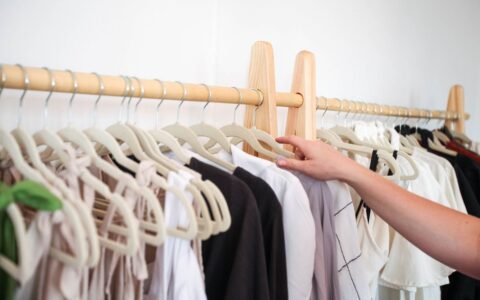
Basics are the one category where buying more at once genuinely costs less. The savings come from promotional structure, not from quantity discounts.
Why Basics Are Priced Differently
Plain tees, socks, underwear and everyday denim are carried year round, which changes the economics completely. Seasonal items get marked down because unsold stock becomes worthless. Basics never become worthless, so they are never desperately discounted. Instead they are used as volume drivers, which means the discounts arrive as multi item offers rather than clearance.
This is why a single plain tee rarely goes on deep sale while three for the price of two appears constantly. The retailer makes its margin on the volume rather than the unit, and the structure of every offer reflects that. Shopping these categories one item at a time means paying the price the store set specifically for people who do.
The result is a reliable annual pattern rather than a hunt. If you know you will wear through socks and tees at a steady rate, the question is not whether to buy several but when. Timing one larger purchase a year against the strongest multi item promotion is almost always cheaper than a dozen small purchases at whatever the price happened to be.
Work Out How Much You Actually Use
The failure mode of bulk buying is buying the wrong quantity of the wrong thing. Before stocking up, count what you have and think honestly about replacement rate. Most people replace socks and underwear roughly annually, plain tees every one to two years depending on wash frequency, and jeans every two to three.
A simple approach is to count how many of an item you wear in a typical laundry cycle and multiply by two, which gives you enough to never run short without accumulating a drawer you cannot close. For socks that is usually ten to fourteen pairs. For plain tees, seven to ten. Beyond that you are storing inventory rather than owning clothes.
Resist the urge to extend the logic to anything with a trend component. Bulk buying only works where your preferences will not change, which rules out colors you are currently enjoying, cuts that are in fashion, and anything you have owned for less than six months. If you have not worn an item long enough to know you like it, you cannot know you want five.
Quality Changes the Math Completely
Buying five cheap tees that last six months is worse than buying three good ones that last three years, and this is where most bulk buying goes wrong. The calculation that matters is cost per wear over the life of the garment, and the cheapest unit price frequently loses badly on that measure.
Fabric weight is the single most useful quality signal for basics. A heavier cotton tee holds its shape through many more washes than a thin one, resists becoming transparent, and does not develop the stretched neckline that retires most cheap shirts. Listings that publish weight in grams per square meter are giving you the information you need, and anything around one hundred and eighty or above is substantial.
For socks and underwear, look at the composition and the construction of the band. Elastic that fails is what ends the life of both items long before the fabric wears out. A higher elastane content and a wider, flatter waistband or cuff survives considerably more laundry cycles, which is why the mid price options often outlast the cheapest by several times rather than slightly.
When the Promotions Actually Land
Multi item basics offers cluster at predictable points. The weeks after the winter holidays, when retailers want volume to recover from discount heavy trading. Late summer, around back to school periods, which pulls plain clothing into promotion. And the long November promotional stretch, where basics are used to lift average order values.
Store newsletters are more useful here than general coupon sites, because basics promotions are usually site wide events rather than code driven. Signing up to two or three retailers whose basics you already like, and ignoring the rest of their email, costs nothing and puts the dates in front of you without searching.
If you buy from the same brand repeatedly, their loyalty program is usually worth joining for this one purpose. Points on a single large annual order often convert to a meaningful discount on the next one, and tiered programs frequently include early access to exactly these promotional events. It is one of the few cases where loyalty programs pay more than they cost in attention.
Store It So You Actually Use It
The practical problem with buying a year of anything is that half of it disappears. Items pushed to the back of a drawer get forgotten, and you end up buying again while a sealed pack sits twenty centimeters away. Keeping the surplus in its packaging, in one labeled place, solves this almost entirely.
Rotate rather than stack. Put new items at the bottom of the pile and take from the top, which spreads wear evenly instead of destroying three favorites while seven stay new. This is the same principle used in stock rooms and it works for the same reason, which is that use concentrates wherever it is easiest to reach.
Finally, keep a short note of what you bought and when. In a year you will not remember whether the current socks are two years old or four months old, and that is exactly the information needed to decide whether the next promotion is worth acting on. One line in a phone note is enough to make the whole approach repeatable.